
Canada Lee (born Leonard Lionel Cornelius Canegata on March 3, 1907) was one of the greatest actors of his generation.
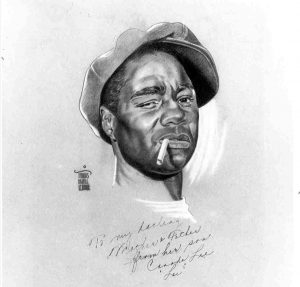
No one who witnessed his performances on the stage and screen (his films included: “Lifeboat”, “Body and Soul”, “Cry, the Beloved Country”) could fail to be affected by his blazing talent, and the dignity and humanity he always imparted. He was a self-trained actor who used his musical training and his background as a jockey and prize fighter, to inform the movement and physicality of his performances. His deep, melodious voice was also a great asset.
However, Canada Lee was much more than just a great actor. He cared deeply about his fellow man and fought diligently to break down the barriers of racism. In fact, his concern for furthering brotherhood and equality was so deeply ingrained in him, that he only accepted roles that would enable him to educate society and help benefit his race.
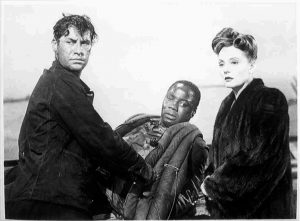
At a time when black people were exclusively offered stereotypical roles, Canada Lee refused to engage in such portrayals. Even if he had to rewrite lines, he would constantly fight for dignity in his portrayals, he would not back down. Against great odds and opposition, he was successful in bringing dignity to the role of the stevedore, George ‘Joe’ Spencer, in Alfred Hitchcock’s 1944 film, “Lifeboat.” This role was one of the first in Hollywood for a black character that departed from the stereotypical casting of the era. In fact, the role of Joe, in “Lifeboat,” was originally written stereotypically but Lee refused to portray it that way. Not only did he change the role but Lee’s reinvented character became the moral center of the film. Canada Lee was determined to do whatever it took to be a man and to live his life with integrity.
This quote from the New York Times, Sunday, July 10, 1949, gives a glimpse into his determination…
“Canada Lee, Negro actor, charged yesterday that the “lynch mentality” of American radio made “cannibals, dehumanized monsters, clowns, menials, thieves and liars” out of the Negro people whom it had “jailed in a concentration camp of silence where we are surrounded by indifference and our real words reach nowhere”.
The unfortunate fact however is that Canada Lee today, has largely been forgotten by the general public.
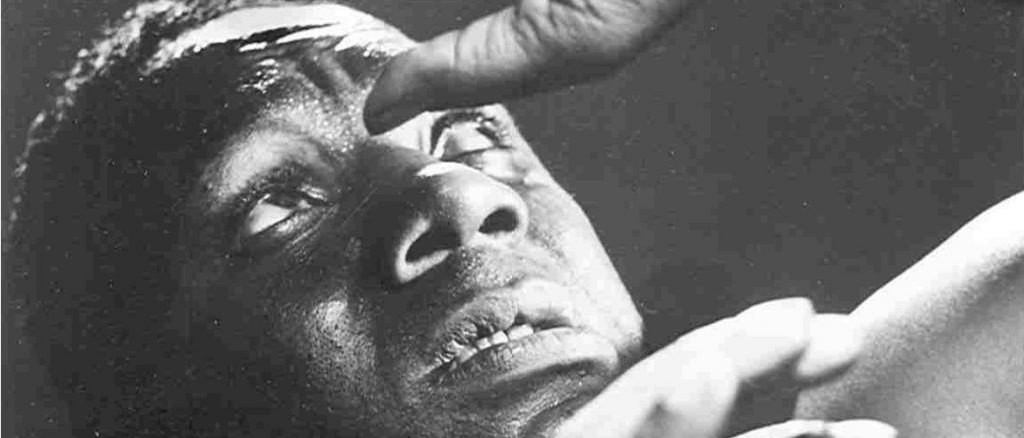
As film historian, Robert Edwards wrote, “Lee’s achievements were all but swept away during the Red Scare of the late 1940s and early 1950s. For speaking his mind about race relations in this country [and for preserving his dignity and integrity], Lee was blacklisted and eventually hounded into an early grave.” Writer Stefan Kanfer eloquently states in ‘A Journal of the Plague Years’, “Canada Lee is the Othello of the blacklist, at once its most afflicted and ignored victim”.
The global community in which we live today, needs to understand our past in order to march forward into a better future for all mankind.
As we look back on the twentieth century from this new millennium, everyone should have the opportunity to learn about and rediscover one of that century’s most important and talented achievers. Canada Lee achieved great things at a time when overt and institutionalized racism was rampant in this country. Of his groundbreaking role as Bigger Thomas in “Native Son,” Brooks Atkinson wrote: “Lee is a superbly imaginative player. When he is on the stage, he inhabits it – knows where all the doors lead, what the windows look out at, knows where he can be seen or not seen from other parts of the room – the quality of life Mr. Lee imparts to a scene is overwhelming – partly physical, partly magnetic.” Another critic commented: “Canada Lee draws from the role every ounce of meaning, sympathy and sincerity… It is a performance of extraordinary sensitiveness, great natural force [and] fierce intensity of feeling.” Lee’s main desire he said was “to help win better roles for people of my race, and [to win] a better understanding of people of my race. I want to do things to repair the wrong impressions that have grown up through the years.”
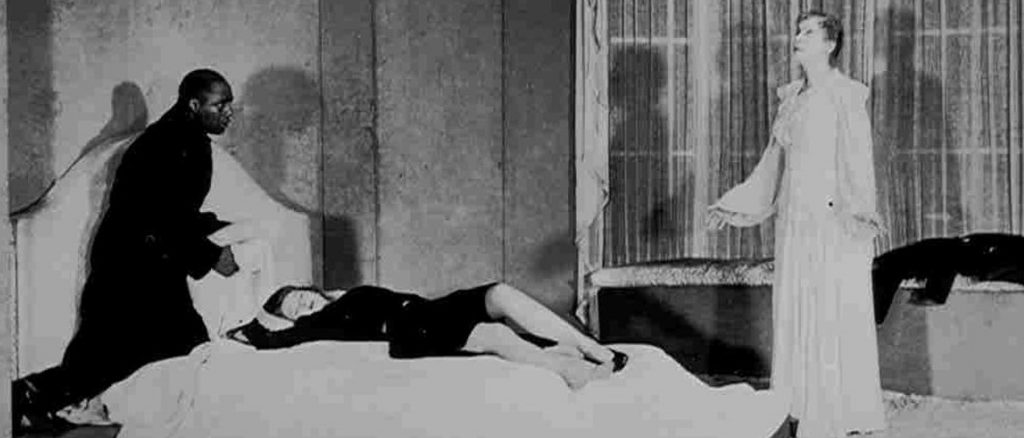
For taking such a courageous stand, Lee paid a great price. He became better known for his roles on stage because he refused to play stereotypical roles on the screen, and so was limited (despite his great talent) in his film career. The limits did not matter however… Lee was not interested in furthering his career for ego or monetary gains. He was more interested in “rallying those he touched to the cause of the equality of man.” His great stature as a man and as an artist is unequaled.
Such a man can only inspire others to live their lives to the fullest. Canada Lee was a giant among men. He combined the courage and heart of a lion with gentleness, compassion, integrity, and above all love for his fellow man.
For more information…
The Canada Lee Wikipedia page is actually a good initial resource for some of the publicly available information about Canada’s history.
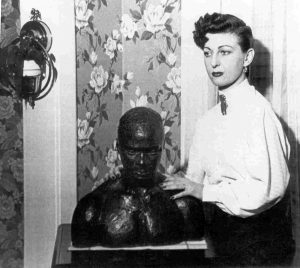
The Schomburg Center for Research in Black Culture (a research division of The New York Public Library), located in the Harlem area of upper New York City, holds all the materials donated by Frances shortly before her death. This includes information about the first Canada Lee Foundation, news and magazine clippings, playbills, photographs, interviews and other recordings, the original bust of Canada Lee created from a death mask and more.